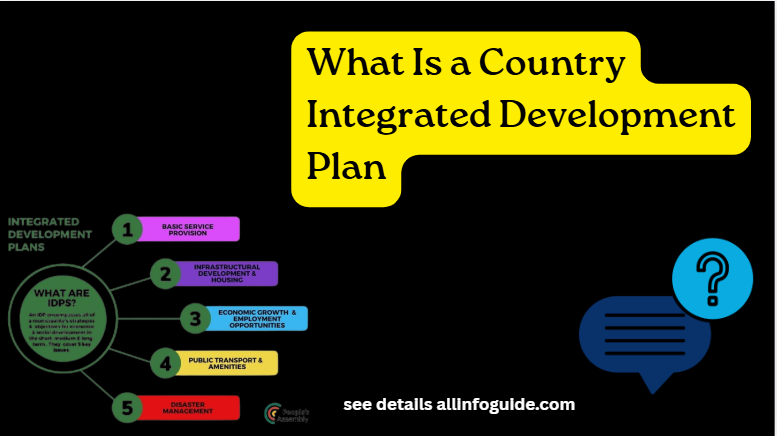
What Is a Country Integrated Development Plan
sWhat Is a Country Integrated Development Plan?
In today’s rapidly changing world nations need clear structured strategies to achieve sustainable growth and improve the quality of life for their citizens. One of the most important tools used for this purpose is a Country Integrated Developments Plan. But what is a country integrated development plan and why is it so important?
In this comprehensive friendly guide we will explain what is a country integrated developments plan its meaning components benefits and how it helps countries achieve long term progress.
What Is a Country Integrated Developments Plan?
A Country Integrated Development Plan is a strategic framework that outlines a nation’s long term goals and priorities across multiple sectors such as economy infrastructure health education environment and governance.
In simple terms what is a country integrated development plan? It is a roadmap that combines different development areas into one unified strategy to ensure balanced and sustainable national growth.
Purpose of a Country Integrated Developments Plan
Understanding what is a country integrated developments plan becomes easier when you look at its purpose.
The main goals include:
Coordinating development across sectors
Reducing poverty and inequality
Promoting economic growth
Improving public services
Ensuring sustainable resource use
A country integrated development plan ensures that all sectors work together instead of operating in isolation.
Key Components of a Country Integrated Developments Plan
To fully understand what is a country integrated developments plan you need to explore its core components.
1. Vision and Objectives
Defines the long term goals of the country.
2. Sectoral Strategies
Plans for key sectors such as:
Health
Education
Agriculture
Infrastructure
Industry
3. Budget and Resource Allocation
Specifies how funds will be distributed.
4. Implementation Framework
Explains how the plan will be executed.
5. Monitoring and Evaluation
Tracks progress and ensures accountability.
Why Integration Is Important
The word integrated is key when defining what is a country integrated developments plan.
Instead of separate plans for each sector integration ensures:
Better coordination
Efficient use of resources
Reduced duplication of efforts
Stronger policy alignment
Benefits of a Country Integrated Development Plan
Many governments adopt this approach because of its advantages.
1. Holistic Development
It addresses social economic and environmental issues together.
2. Improved Governance
Clear plans lead to better decision making.
3. Sustainable Growth
Balances development with environmental protection.
4. Accountability
Defined goals make it easier to track progress.
5. Investor Confidence
A structured plan attracts local and foreign investment.
Table: Key Features of a Country Integrated Development Plan
| Feature | Description |
| Strategic Vision | Long term national goals |
| Multi Sector Approach | Covers all major development areas |
| Resource Planning | Budget allocation and funding strategy |
| Implementation Plan | Steps for execution |
| Monitoring System | Tracks progress and outcomes |
| Sustainability Focus | Ensures long term environmental balance |
Difference Between Traditional and Integrated Planning
To better understand what is a country integrated development plan compare it with traditional planning.
| Aspect | Traditional Planning | Integrated Development Plan |
| Approach | Sector based | Multi sector |
| Coordination | Limited | High |
| Efficiency | Lower | Higher |
| Sustainability | Often ignored | Strong focus |
| Outcome | Fragmented development | Balanced growth |
How a Country Integrated Development Plan Works
The process of creating and implementing such a plan typically includes:
1. Data Collection
Gathering economic social and environmental data.
2. Stakeholder Consultation
Engaging citizens experts and organizations.
3. Policy Formulation
Designing strategies for each sector.
4. Implementation
Executing projects and programs.
5. Monitoring and Review
Evaluating progress and making improvements.
Real World Applications
When exploring what is a country integrated development plan it helps to see how it is used globally.
Many countries adopt integrated plans to:
Improve infrastructure
Expand healthcare systems
Enhance education quality
Promote renewable energy
Support rural development
Challenges in Implementing a Country Integrated Development Plan
Despite its benefits there are challenges:
Limited financial resources
Weak coordination between agencies
Political instability
Lack of data or expertise
Implementation delays
Role of Government and Institutions
Governments play a central role in developing and implementing these plans.
Key responsibilities include:
Policy development
Budget allocation
Coordination between departments
Monitoring and evaluation
Strong institutions are critical for success.
Importance for Developing Countries
It helps:
Reduce poverty
Improve infrastructure
Strengthen institutions
Promote economic stability
How It Supports Sustainable Development
A country integrated developments plan aligns closely with global sustainability goals by:
Protecting natural resources
Promoting renewable energy
Encouraging inclusive growth
Reducing environmental impact
Tips for Effective Development Planning
To make the most of a country integrated developments plan:
Ensure stakeholder participation
Use accurate data
Set realistic goals
Monitor progress regularly
Adapt to changing conditions
Why This Concept Is Important Today
In a globalized world countries face complex challenges such as climate change economic instability and population growth.
It provides a structured way to address these challenges while ensuring long term progress.
Final Thoughts
By integrating different sectors into one unified plan countries can achieve balanced growth improve living standards and build a better future for their citizens.








Post Comment