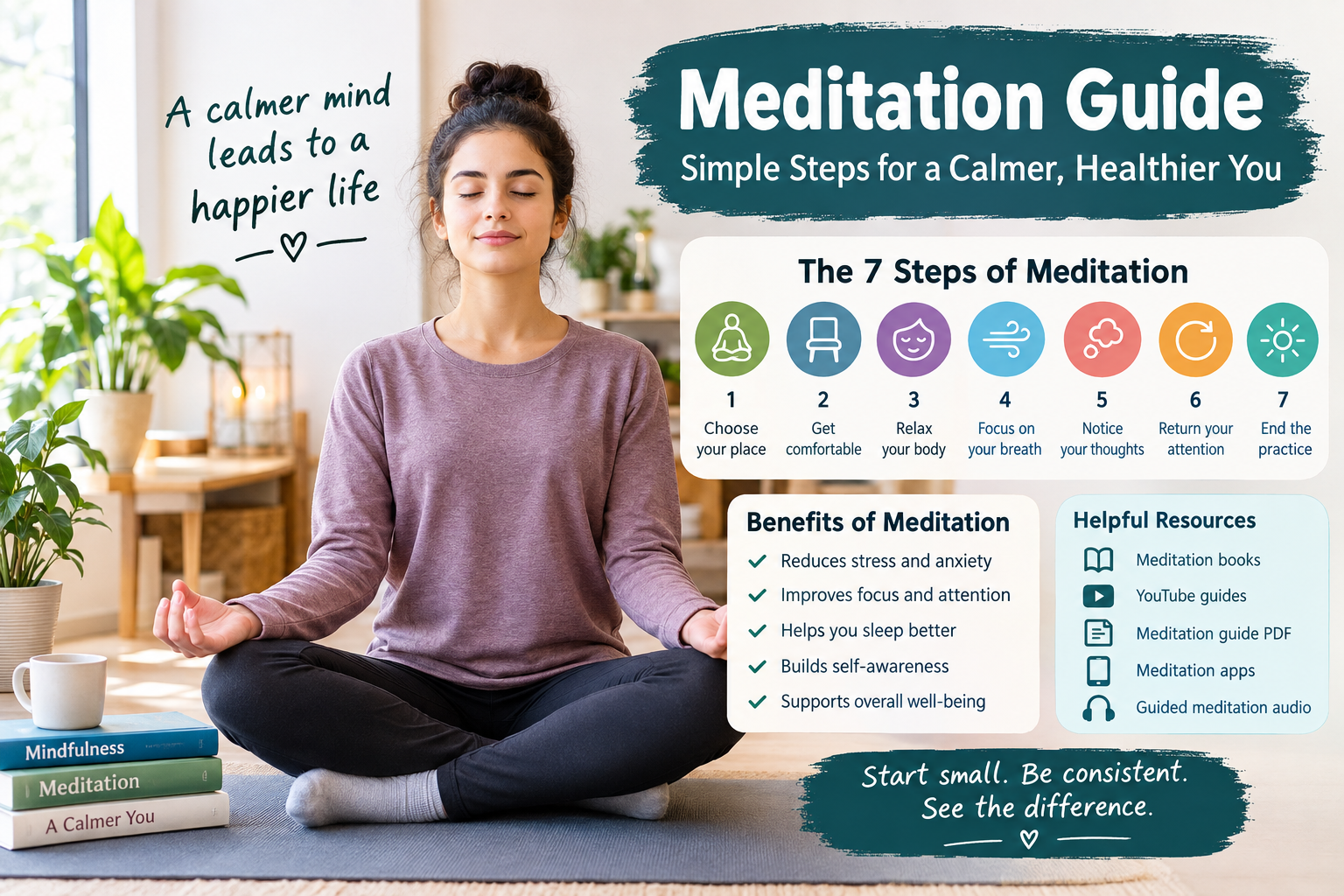
Meditation guide
Meditation guide
Meditation is a simple practice that can help you slow down focus your mind and become more aware of your thoughts. You do not need special equipment or a lot of free time to start. Even a few quiet minutes each day can be a good beginning.
This meditation guide explains how beginners can meditate the basic steps to follow and how to build a simple meditation habit.
What Is Meditation?
Meditation is a practice where you give your attention to the present moment. You may focus on your breathing a sound a word or how your body feels.
During meditation your mind may wander. This is normal. The goal is not to stop every thought. Instead you notice when your mind moves away and gently bring your attention back.
Meditation can be practiced while sitting standing walking or lying down depending on the type of meditation.
How Should a Beginner Start Meditating?
A beginner can start with just 5 minutes a day. You do not need to meditate for a long time at first.
Follow these simple steps:
- Find a quiet place: Choose a place where you can sit without many distractions.
- Sit comfortably: Sit on a chair cushion or the floor. Keep your back comfortable and upright.
- Set a short timer: Start with 5 minutes.
- Focus on your breathing: Notice your breath as you breathe in and out.
- Notice your thoughts: When a thought appears simply notice it.
- Return to your breath: Bring your attention back to breathing.
- Finish slowly: When the timer ends take a moment before getting up.
The most important thing is to practice regularly. A short daily session can be easier to maintain than a long session once in a while.
What Are the 7 Steps of Meditation?
There are different ways to meditate so the exact steps can vary. A simple meditation guide for beginners can use these seven steps:
- Choose Your Place
Find a calm and comfortable place. It does not have to be completely silent.
- Get Comfortable
Sit in a position that allows you to stay relaxed. You can sit on a chair with your feet on the floor.
- Relax Your Body
Let your shoulders drop and relax your hands face and jaw.
- Pay Attention to Your Breath
Notice each breath. You do not need to change the way you breathe.
- Notice Your Thoughts
Thoughts will come and go. Do not fight them or become upset with yourself.
- Return Your Attention
When you notice that your mind has wandered gently return your attention to your breath.
- End the Practice
When your session is finished slowly open your eyes and notice how you feel before continuing with your day.
What Is the Correct Way to Meditate?
There is no single perfect way to meditate. The correct approach is one that allows you to practice safely and comfortably.
For basic mindfulness meditation sit comfortably keep your body relaxed and focus your attention on something simple such as your breathing.
Your mind will probably wander. That does not mean you are doing meditation incorrectly. Noticing the distraction and returning your attention is an important part of the practice.
You also do not need to force your mind to become completely empty. Meditation is more about noticing what is happening and bringing your attention back.
What Are the Benefits of Meditation?
Meditation may offer several benefits when practiced regularly. Research has found that mindfulness and meditation practices may help with stress anxiety symptoms attention and general well-being.
Some people use meditation to:
- Relax after a busy day
- Reduce everyday stress
- Improve focus
- Become more aware of their thoughts
- Create a peaceful daily routine
- Practice better attention to the present moment
- Prepare for sleep and relaxation
Results can be different for each person. Meditation should not be seen as a replacement for professional medical care when someone has a health problem.
What Is the Best Guide to Meditation?
The best meditation guide is one that is simple enough for you to follow and practice regularly.
Beginners can start with basic breathing meditation or guided meditation. A guided meditation uses spoken instructions to help you focus during the session.
You can also find meditation books videos audio sessions and beginner-friendly apps. If you use an online video or audio guide choose one that explains the practice clearly and does not make unrealistic promises.
The best method is often the one that fits your daily routine.
Meditation Guide for Beginners: A 5-Minute Practice
If you want to try meditation right now use this simple routine:
Minute 1: Sit comfortably and take a few natural breaths.
Minute 2: Pay attention to the feeling of breathing in and breathing out.
Minute 3: Notice your thoughts without trying to change them.
Minute 4: If your mind wanders gently bring your attention back to your breath.
Minute 5: Take a few slow breaths and notice how your body feels.
That is enough for a beginner. You can slowly increase your practice time as you become more comfortable.
What Is a Guided Meditation?
Guided meditation is a form of meditation where someone gives you instructions while you practice.
A guide may tell you when to breathe where to place your attention or how to relax different parts of your body.
Guided meditation can be useful for beginners because you do not have to remember every step yourself.
You can find guided meditation through:
- Online videos
- Audio recordings
- Meditation apps
- Books with meditation instructions
- Meditation classes
When looking for a meditation guide on YouTube or another platform choose a session that matches your experience level and the amount of time you have.
Can You Use a Meditation Script?
Yes. A meditation script can give you simple instructions to follow.
For example a basic breathing script might ask you to sit comfortably notice your breathing and gently return your attention whenever your mind wanders.
Scripts can be useful when you want to practice alone or create your own short routine.
Meditation Guide PDF and Books
Some people prefer to learn from written material. A meditation guide PDF or book can explain different meditation methods and provide exercises to practice.
When choosing a guide look for clear instructions that explain the basics without making unrealistic health claims.
A beginner-friendly guide should explain:
- How to sit or position your body
- How to focus
- What to do when your mind wanders
- How long to practice
- Different types of meditation
- How to create a regular routine
Meditation on YouTube
YouTube has many guided meditation videos. These can be useful if you prefer listening to instructions rather than reading them.
Try searching for terms such as:
- Meditation for beginners
- 5-minute meditation
- Breathing meditation
- Guided mindfulness meditation
- Relaxation meditation
- Sleep meditation
Choose a session that is easy to understand and fits your needs.
Common Mistakes Beginners Should Avoid
Meditation can seem difficult at first. Many beginners make the same mistakes.
Trying to Stop Every Thought
Your brain will continue to produce thoughts. You do not need to stop them completely.
Starting for Too Long
Starting with 5 or 10 minutes can be easier than trying to meditate for 30 minutes on your first day.
Getting Upset When Your Mind Wanders
Mind wandering is normal. Simply notice it and return to your chosen focus.
Expecting Instant Results
Meditation is a practice. Give yourself time to learn it and develop a routine.
Worrying About Perfect Posture
Comfort is important. You can sit on a chair if sitting on the floor is uncomfortable.
How Often Should You Meditate?
There is no need to make your routine complicated. Try practicing for a few minutes each day.
You might meditate:
- After waking up
- During a lunch break
- After work or school
- Before going to bed
- During another quiet part of your day
Pick a time that you can repeat regularly. A consistent routine can make meditation easier to maintain.
Final Thoughts
Meditation does not have to be difficult. Start with a comfortable place a few minutes and simple attention to your breathing.
This meditation guide can help beginners understand the basic process and start building a simple practice. Remember that it is normal for your mind to wander. The key is to notice it and gently return your attention.
With regular practice you can explore different meditation styles and find a method that works well for your daily routine.











Post Comment